Australia's Under-16 Social Media Ban Is Stumbling. What It Means for Age Checks Online
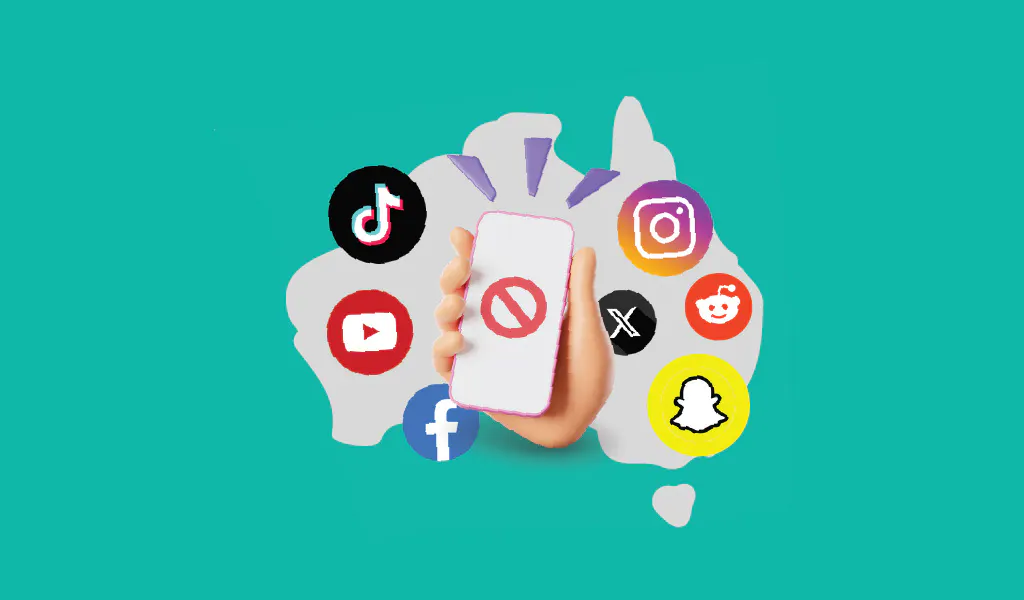
Australia did something no other country had done. In December 2025 it made it illegal for under-16s to hold accounts on the big social media platforms, and put the job of enforcing it on the platforms themselves. It was watched closely around the world. Now the first real data is in, and the honest summary is that it is not doing a great job.
What the early numbers show
The headline finding is that not much changed. Before the ban, roughly 86% of surveyed children were using at least one age-restricted platform. Three months after it began, that figure was still above 81%. Most kids who had accounts before the ban simply kept them or made new ones.
The enforcement side looks worse. In one test, 50 accounts were spread across nine of the ten regulated platforms, including Instagram, Snapchat, TikTok and YouTube, and almost all of them sailed through with no genuine age check. Only Kick asked for proof of age up front. Reports since suggest a large share of children are getting around the rules without much effort at all.
Why it isn't working: the age check is the weak link
The whole thing hinges on "age assurance", the technology that is meant to work out how old a user is. That is where it falls down, for two simple reasons.
First, the checks are not reliable. The first pass is usually age estimation, which guesses your age band from how you behave online or from a quick face scan. It is easy to fool and it misses plenty of young users, so they never get pushed to a stricter check. Age estimation from a selfie can be off by several years, which is a lot when the line you are policing is a single birthday.
Second, it is easy to bypass. A child can put in a false date of birth, borrow an adult's login, or use a VPN to look like they are somewhere the rules do not apply. None of that takes any real skill. When the barrier is that low, a determined teenager walks straight over it, which is roughly what the numbers show.
There is a practical takeaway for parents in that. If a national ban cannot be relied on to keep kids off social media, the controls that actually work still sit with you at home. We covered the hands-on side of that in Keeping Kids Safe Online: How to Block Inappropriate Websites at Home.
The privacy catch nobody loves
Here is the trap. The obvious way to make the checks harder to dodge is to demand real proof, like a government ID or a verified digital identity. But that means millions of people, adults included, handing sensitive documents to social media companies just to log in. That is a fresh pile of exactly the data attackers most want to steal. So the choice sits between checks that are weak and easy to bypass, or checks that are stronger but create a real privacy and security risk. There is no clean answer, which is why every country trying this is wrestling with the same problem.
What it means if your business verifies anyone online
This is where it stops being a parenting story and starts being relevant to any business that has to confirm who someone is, whether that is proving a customer is over 18, meeting a Know-Your-Customer rule, or simply stopping fake sign-ups. The lessons from Australia's stumble are practical ones.
- Estimation is a filter, not proof. Behaviour or face-scan guesses are fine for a soft nudge, but do not lean on them for anything that actually matters.
- The more you demand, the more you have to protect. Collecting IDs to verify people turns your sign-up form into a target. Only ask for what you genuinely need.
- Do not store what you do not need. If you must verify an ID, check it and keep a yes or no result, not the document itself. What you never stored cannot be leaked.
- Expect friction to cost you customers. Every extra hoop loses real sign-ups, so the check has to be worth the drop-off.
So, does the ban matter?
It clearly matters as a signal. Australia has shown it is willing to lean on the platforms, and other governments are watching. But as a piece of technology, the first few months have made the limits obvious: age checks that are simple to fool and simple to bypass do not keep many kids off social media, and the fix that would work brings its own risks. For the rest of us, it is a useful reminder that verifying identity online is genuinely hard, and that the sensible path is to verify only what you must and hold onto as little as possible.