
OpenAI Just Hit $25 Billion in Revenue, What the AI Boom Actually Means for Perth Businesses
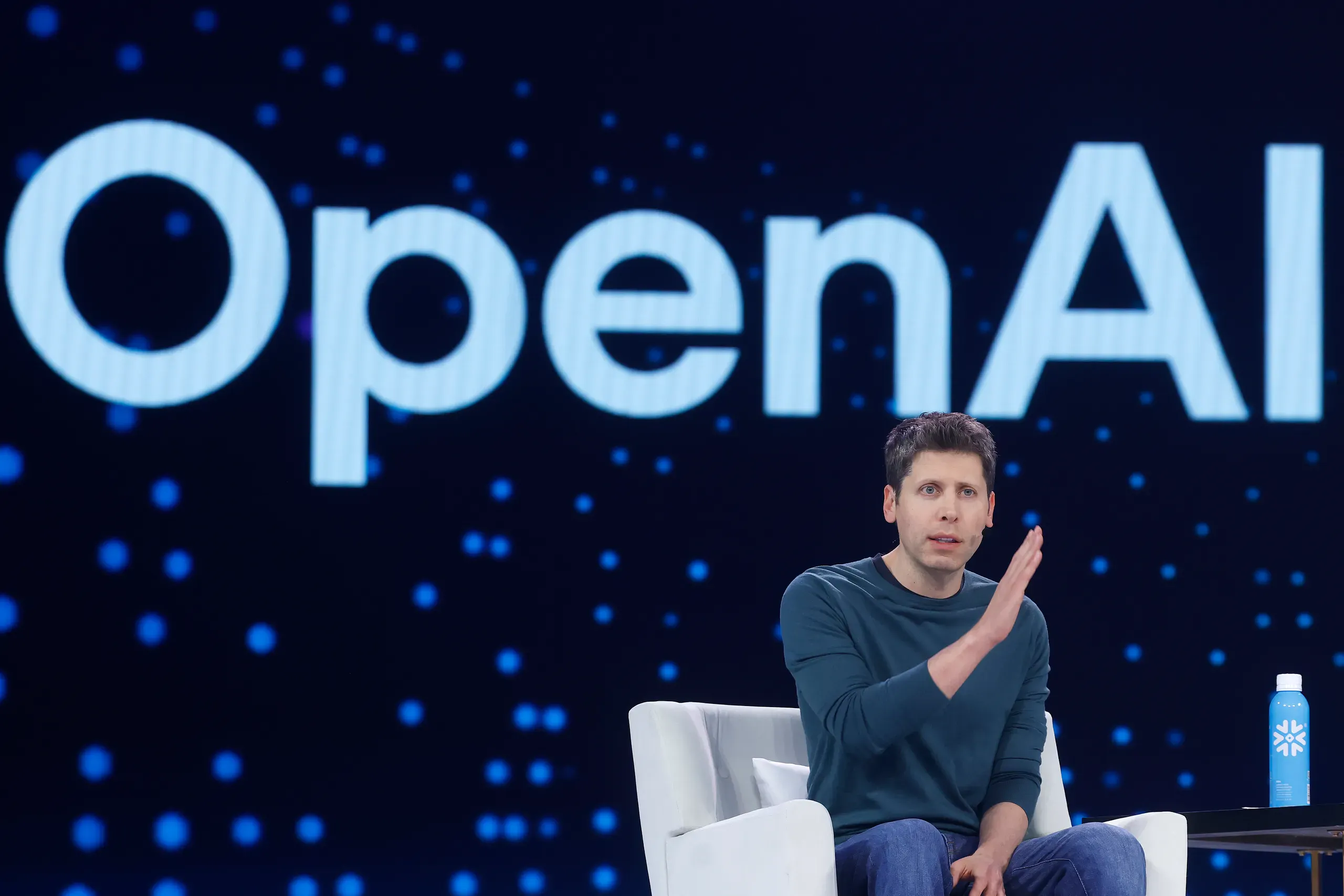
OpenAI has crossed $25 billion in annualised revenue, and there is serious talk of a public listing. To put that in perspective, the company reported around $1 billion in 2023 and roughly $3.4 billion in 2024. Climbing past $25 billion in 2026 is one of the fastest revenue ramps in business history, and it has cemented AI as a genuine economic force rather than a passing fad.
Those are the kind of numbers that make headlines and, frankly, make a lot of small business owners feel like they are missing out on something. So let's step back from the billions and ask the only question that actually matters from where you sit in Perth: is all this money translating into real value for ordinary businesses yet, or is it mostly hype?
The number is real, but it isn't the point
It is worth being clear-eyed about what $25 billion in revenue does and doesn't tell you. It tells you that an enormous number of people and companies are paying for AI, that investor enthusiasm is white-hot, and that the tools are improving fast because there is money to fund that improvement. It does not tell you whether the average small business is getting its money's worth.
Revenue measures what is being spent, not what is being gained. Plenty of that $25 billion is enterprise contracts, developers building products, and yes, a fair share of businesses paying for subscriptions they barely touch. The boom is real. Whether it has reached your bottom line is a separate question, and an answerable one.
What's genuinely working for small businesses
We should give credit where it is due, because the wins are real when AI is matched to the right task.
The clearest gains we see among Perth businesses are in writing and admin. Drafting quote follow-ups, customer emails, social posts, and service descriptions used to eat hours every week. A business owner who has built a few good AI templates routinely claws back two or three hours, and those are billable or family hours, not abstract ones.
Marketing is another genuine win. Small businesses that never had a copywriter or a marketing budget can now produce consistent, decent-quality content and keep their websites and social channels active. We have seen that translate into measurable jumps in website traffic and enquiries.
And increasingly, the value arrives without anyone "using AI" at all, because it is being baked directly into the software you already run. Xero, Shopify, MYOB, and the major email platforms are embedding AI into their everyday features, so you benefit from better expense categorisation or smarter search without subscribing to anything new.
The reality check
Now the honest other side, because pretending it is all upside helps nobody.
A lot of businesses subscribed to AI tools in the rush and quietly use them once a month. That is money leaking out the door. AI also still requires human oversight: it can produce confident, wrong answers, and it is not safe to point at clients or finances without someone checking the output. The gap between the hype ("AI will run your business") and the deployment reality ("AI helps you write emails faster") remains wide, and anyone who tells you otherwise is selling something.
None of this means AI isn't worth it. It means the value is specific and earned, not automatic. The businesses getting real returns are the ones that picked one or two concrete tasks and stuck with them, not the ones chasing every shiny tool.
A simple way to measure your own ROI
You do not need a spreadsheet wizard to work out whether AI is paying off for you. Here is a framework you can run through in fifteen minutes.
List every AI subscription you currently pay for, with its monthly cost in dollars. Include the ones bundled into other tools if you pay extra for them.
For each one, estimate how many hours it genuinely saves you or your team per month. Be honest, and if the answer is "I'm not really sure I use it", that is itself the answer.
Multiply those saved hours by what an hour of that time is worth, whether that is your charge-out rate or simply what you would pay someone to do the task. Compare that figure to the subscription cost.
If a tool is clearly in the red, cancel it without guilt. If it is comfortably in the black, that is your signal to lean in: learn it properly, build a few more workflows around it, and get more out of what you are already paying for. Most businesses we run through this exercise find they should cut one or two subscriptions and double down on one.
Where this leaves you
The AI boom is real, the money is staggering, and it is not going away. But the milestone that matters for your business is not OpenAI's revenue. It is whether you have found even one or two genuine AI workflows that save you time or win you work.
If you have, you already hold a quiet, compounding advantage, because these tools keep getting better and cheaper while you keep getting more practised at using them. If you haven't yet, there is no need to panic about the headlines. Pick one repetitive task this month, try AI on it properly, measure whether it actually helped, and decide from there. That measured approach beats both ignoring AI and throwing money at every tool that trends. If you would like a hand working out where AI genuinely fits in your business, that is a conversation we are always happy to have.